I’ve Hit my Pandemic Wall- Again!
It All Begins Here
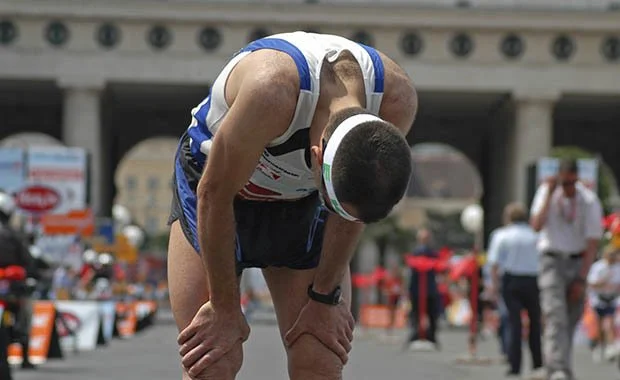
Lately, there have been several articles written about how many of us are hitting the pandemic “wall”. As you probably know, the wall concept comes from marathons. While I’m not crazy enough to run marathons, my husband is, so I have learned about them from him. Marathons are 26.2 miles long, and the “wall” comes for most runners around the 18-mile mark. This is the point at which our bodies have used up most of their resources and cry for us to stop running; however, we are still capable of pushing on, if we ignore the pain and keep a positive mindset, cheering ourselves on. We are still able to cross the finish line if we battle the fatigue, suffering, and doubt. We can do this, in part, because we know where the finish line is, and we know it is not that far away, compared to the distance we have already run.
We have now been in this damn pandemic for a looooooooooong time. While a marathon has a definite end, this pandemic does not have a clear finish line. We know/hope we will get vaccines soon. Or this decade. And we know/hope life will return to some semblance of “normal”. We long for hugs, concerts, travelling, leaving the house regularly, etc.
What we are experiencing is like a crazy phantom marathon out of a sci-fi movie, where you don’t know how long you will be running for or what you need to do to cross the finish line. It is like one of my nightmares, where I am trying to get somewhere, and I am trying to get somewhere, and I am trying to get somewhere, and I never seem to get there. Do you have these dreams too?
Well, I think I’ve hit my pandemic wall- again. For me, it feels like it has been a cycle. I feel like I do well for a while. I use my coping skills. I exercise and meditate. I connect with my supports. I hug my husband and take pleasure in the small things. I keep my gratitude journal nightly.
And then, once again, I am cranky and irritable. I am so sick of wearing masks!! I am so sick of my constricted small life!! I am so sick of my home!! And I don’t feel great, emotionally.
There is no easy answer or solution to this wall-hitting-cycle. I am not going to tell you to just go take a bath or a walk, and it will all be better. This pandemic is taxing and testing all of us, regardless of our coping skills and self-care.
What I would suggest is to have some acceptance and compassion for yourself, to recognize that you are in a rough space. That this pandemic sucks. That we have all lost and missed so much this past year-and that we do not know when or how things will improve. Allow yourself to cry or scream or have a glass of wine. Be gentle with yourself. And then, in a day or two, or more if you need, step back and figure out what will help you at this point in the phantom marathon.
I recently read a book I really enjoyed and found useful called Burnout: The Secret to Unlocking the Stress Cycle by sisters Emily Nagoski, PhD and Amelia Nagoski, DMA. They write about how our emotions are like tunnels, and we have to go through them to complete the emotion we are experiencing. Some of the best ways to complete the stress cycle and release feelings are things I recommend to my clients all the time: breathing, exercise, connecting with your support, creating or being around creativity, writing, cooking, etc.. They also name laughing, crying, and getting/receiving affection as helpful ways to release your feelings and exit the tunnel.
So, once you have exhaled and accepted that you are in a rough place- again!- step back and determine what will help you regain your footing and move forward again. What is it that you think you need right now to make it to the phantom finish line? Or at least until your next wall.
Acceptance: Part 2
It All Begins Here
Several months ago, I was speaking with a coaching client, “Tom”. Tom was a STEM graduate student, and his advisor was pretty emotionally abusive and critical. My client was understandably struggling with anxiety and self-confidence, and he acted like someone in an abusive relationship. He would tell himself that if he just got certain things accomplished or worked seven days a week, his advisor would finally become supportive and help him move forward with his academic career. However, because his advisor has never displayed kindness or emotional support, Tom’s thinking was irrational. This led to frustration and pain as he kept hoping for support and a response that would never come from this particular advisor.
While working with Tom, I was reading a wonderful book, Self-Compassion: Stop Beating Yourself Up and Leave Insecurity Behind by Kristin Neff, Ph.D., as I was preparing a self-compassion workshop. In the book, I came across an equation that reminded me of Tom:
Suffering=Pain x Resistance
As Dr. Neff writes, and as Buddhism teaches, suffering occurs when we compare our reality to our ideals. When we keep wishing and hoping for a different reality, and when this reality does not match our desires, we suffer. We can’t avoid pain, but we can avoid suffering – if we accept “what is”. We suffer emotionally because we want things to be different than what they are and by not accepting our actual situation.
I think about this concept with respect to the pandemic, and I can see how I personally struggle with it. At times, I find myself frustrated and angry by the pandemic and how it is impacting my life. I focus on all the things I cannot do, all of the things that I have lost, and all the ways that my life has shrunk considerably since March. When this is my focus, I am upset. On the other hand, when I can accept my current situation and work within my life’s current boundaries and find its COVID silver linings, I actually feel calmer and more positive.
Tom and I spoke about these ideas, and we looked at how his lack of acceptance was contributing to his anxiety and distress. This concept was really eye-opening to Tom and stopped him temporarily in his tracks as he thought about it. We looked at how he could approach his relationship with his advisor with acceptance, acknowledging that the advisor could not be anyone other than they were.
As Tom began to shift his focus, his anxiety and self-confidence began to improve. He was able to stop internalizing the negative messages from his advisor and protect himself from this hurt. Tom developed more of a “screw them” attitude, which improved his resilience and inner strength, and gave him distance from the abuse. He also began to recover emotionally much more quickly from toxic encounters with his advisor. Tom’s advisor has not changed, but Toms’ ability to deal with his current circumstances and build a better future has.
Breakthroughs do not have to be thunderclaps from the clear blue sky; sometimes they can come from small shifts in perception, like this one. This move towards accepting the situation- that his advisor was not going to change his behavior- helped Tom take ownership of the aspects of the relationship he could control: his own responses to the negativity and stress.
Our reality may not always be what we want or what we dreamed, whether it is dealing with the pandemic or struggling with a challenging relationship. However, with a little bit of acceptance, we can always find joy and happiness in the present and work toward a better tomorrow.
Acceptance: Part 1
It All Begins Here
Years ago, I was working with a bright computer science grad student, “Sheryl”. She really struggled with anxiety and then, when she was anxious, she would get down on herself for feeling that way. Sheryl would beat herself up for struggling and say things to herself, such as “how can I feel so anxious?”, “this sucks!”, and “I hate feeling this way. Why can’t I be “normal”?”.
As we got to better understand her anxiety and the thoughts she would have in response to it, I was really struck that she was having anxiety about having anxiety. Distress about having distress. We looked at how the thoughts/feelings she was having about her anxiety made her feel much worse. She named this anxiety about having anxiety “meta-anxiety”.
I began talking with Sheryl about acceptance. Acceptance is looking at what is and treating it and yourself with kindness. Having open eyes and not focusing on how you want things to be or feel different. I think of the Serenity Prayer, from Alcoholics Anonymous, often when I am trying to explain acceptance: “God grant me the serenity to accept the things I cannot change, courage to change the things I can, and the wisdom to know the difference.”
I started helping this client have more acceptance for herself and her feelings. When she was feeling anxious, she would begin saying, “It’s ok that I’m feeling anxious. It makes sense with all that’s going on right now.” Turning to herself in this manner, with kindness and openness, lowered her distress and helped her anxiety feel more manageable.
When we accept our distress, instead of beating ourselves up for it, we actually feel somewhat better. As Sheryl began treating herself and her anxiety this way, she found the levels lowered as she gave herself space, as well as acceptance and kindness. Sheryl then was more able to use the anxiety management techniques she had gained during her treatment with me.
So, the next time you are struggling with painful feelings, turn with an open eye to what is and treat yourself as you would a friend. Using acceptance and compassion will reduce your distress, and it will give you an opening to figure out how to best help yourself.

Finding Penny and Losing Perfectionism
It All Begins Here
When my husband and I first talked about getting married years ago, we agreed that we would get a dog. Life and job prohibited this for many years. However, because we are both working at home due to the pandemic, it seemed like a perfect time to get a puppy! In particular, we decided to get a Bernese Mountain Dog, which I have become totally enamored with.
In March, we found a breeder who loves her dogs, passed her extensive interview to qualify, and then we waited for our girl to be born. With our breeder, she sent us 30-second videos of the possible puppies, and you choose your puppy in the order in which you sent in your deposit.
Selection day in July was very stressful! We knew we wanted a female, and fortunately there were seven available. I was sure we had a good draft pick because we had been waiting for so long; however, we discovered we were fourth on the puppy list. We rushed to see the remaining puppy videos and faced a conundrum.
One of the things that I love about these dogs is the brown fur around their eyes, which gives them such a kind look. When we saw the remaining four puppies, one had these classic marks and symmetry on her face, and the other three had faces that were half-white without the brown markings around the eyes on one side.
At first, I assumed we would pick the classic symmetrical puppy, but when I saw the video of her, my heart fell. In my gut, I was not thrilled and felt disappointed. Somehow, she was not cute, and she did not speak to me. One of the half-white face puppies, however, was adorable, and I could feel the excitement for her in my gut.
This was a strange position for me, and I found myself confused about what to do: which puppy should I pick? I battle perfectionism, as I am sure many of you do. I like things to be symmetrical and look good. It is important to me that I look nice and “put together” when I go out. I also often value being right and doing things in the “right” way. Somehow this choice was highlighting several of the things that I struggle with in my ongoing work to let go of the perfect and to enjoy life in the moment, with all its imperfections.
Additionally, as embarrassing as this is, I was worried about what people would think or say about a puppy with asymmetrical markings. Would they make negative or critical comments? Would I have to keep defending her uniqueness as a positive attribute? I talk to clients all the time about empowerment that comes from within, and that is not centered in the opinions of others – and here I was worried about how my potential puppy looked to the outside world!
The main question became: should my husband and I choose the dog that “looked right” or should we go with our hearts?
This decision was one we thought about and talked about a lot, and we slept on it overnight. In the morning, we knew who our Penny was. We went with our gut and our hearts, which life has taught me is always the right direction in which to go. She has asymmetrical coloring on her face, - but she is adorable – our perfectly imperfect puppy - and we love her!

My Life’s Orchestra is now a Trio
It All Begins Here
Last weekend, my husband and I took out dinner from one of our favorite restaurants. The food was delicious, and they really made it as special as they could, including nice extras such as the gougères (cheese puffs) that they serve as an amuse bouche and the yummy chocolates that they serve after dessert. The meal was really wonderful, but it was bittersweet. Although the food made me so happy, especially their amazing baguette, it was only a fraction of the full experience that I love when I dine at the restaurant. We did not have the attentive and friendly service, the décor that makes it feel like you are in Paris, and the experience of sharing this moment with others.
I have been thinking a great deal about well-being and how it is impacted by this current pandemic situation, with all its restrictions. I keep reflecting on how negatively impacted our wellness has been, how it has been muted and only a fraction of what our wellness was pre-covid. Similar to my experience of eating this delicious meal.
When I conceptualize well-being with clients, I think about 5 different realms. They are:
1 Social- our personal relationships and connections, our community, our “peeps”
2 Emotional/psychological- how we feel inside and what our energy, engagement, and motivation is like
3 Physical- how we are feeling physically and what we are doing to take care of our bodies (e.g., what are we eating and drinking and how are we exercising, grooming and pampering)
4 Spiritual- what feeds our spirit or soul (e.g., religion, being in nature, making or experiencing art)
5 Financial/productive- how we are doing financially, how we are engaged in productive work and feeling that we are contributing
During our new normal of social isolation, we can still hit on all of these components of wellness, but we cannot fully engage in them. Let us take Social Wellness, for example.
We are social creatures, and we are hard-wired to be around other people. Our brain’s activity is modulated by others, and our brain releases chemicals in response to another person. When we experience being with someone, we engage all our senses. Not only do we see and hear them fully, we also may touch or sense them physically. We may smell them. And we may eat and drink with them.
However, we cannot do that nowadays. Don’t get me wrong. I am so grateful to have video chat as a way to communicate in the current time. However, as I heard someone say, using video chat is like eating processed food. This really resonated with me. Eating processed food will do the trick and fill you up, but it will not be anywhere as satisfying or filling as when you eat real, whole food. When we video chat, we can partially see and hear someone, but we cannot see or hear them fully. There are gaps and lags in the video feed that frustrate our innate practice of turn-taking in conversations. And, it is emotionally draining to engage in this artificial and partial interaction. We are missing the full experience and of being able to really connect. And all components of our well-being are similarly muted at the moment.
It feels like the symphony orchestra that was our lives is now merely a trio. We can hear the melody and appreciate its beauty. The all-encompassing richness of our orchestra is missing; its gorgeous sound is missing. We also cannot really feel it in our bodies in the same way an orchestra would viscerally impact us. Although, I do appreciate hearing a trio, I really look forward to my life’s orchestra returning.
Holding Both the Loss and the Gratitude
It All Begins Here
Here, I am a well-being coach and consultant, but for me, it has been hard to navigate the stress and uncertainty of living through a pandemic. Since this all began, I have not been able to feel inspired or motivated to write in a way to support others. Some days, it feels like more than enough to sleep, exercise, eat well, and do some work.
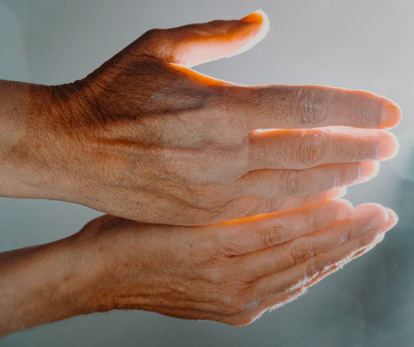
But, as we are more settled in a place of stay-at-home status quo, I have been able to get some distance and reflect more on the experience. One image that I keep thinking of is seeing both of my hands held open and holding what is in both hands at the same time.
I have been thinking about how, on one hand, we are all experiencing so much loss. Some of the loss is small, like not getting to see or hug friends, missing working out at the gym, even missing chatting with a cashier or riding the bus. And, for me especially, eating in a restaurant. Very mundane things that are gone for now- and there is grief with this.
And, we are all experiencing much larger losses as well. Some have lost loved ones or jobs to the virus. Some have lost financial security. Others have lost big plans that they were very much looking forward to. For me, I have lost a bluegrass music festival that I attend yearly and look forward to all year long as well as a special vacation that was planned to celebrate a big birthday. I recognize these are very privileged losses, but loss does not come with judgement. Loss is loss is loss.
I am also thinking about how, on the other hand, there is so much to be grateful for. There are small daily things to value- a conversation with a loved one, a good cup of coffee, being able to take a walk. There are also other things to be grateful for, such as a roof over your head, your health, food in the fridge, and even electricity and running water.
It can feel hard to hold such disparate ideas at the same time, but this is how I think we can navigate this unprecedented time. We need to both hold and acknowledge all the losses and grief that we are experiencing, while also holding onto gratitude for our many blessings. It is through moving forward in this way that I think we will be able to survive and thrive during this amazingly stressful and uncertain time.
I hope you are well and healthy during this stressful time and that you are taking care of yourself as best you can. Please let yourself feel the losses but also appreciate your many blessings daily.
It’s ok to Feel Anxious
It All Begins Here
It’s ok to feel anxious. This is a scary time we’re living in right now. There is a sense of impending doom, and we don’t yet really understand what is going to happen or what we can control. I’ve been thinking about what I need to do to help myself and how we can all manage the anxiety that comes from living through a difficult and uncertain situation. Here are my top 10 ideas for managing anxiety.
1) Acceptance
When I work with clients who experience anxiety, one of the things we talk about is the importance of having acceptance of our feelings. Often, when we have painful or negative feelings, like anxiety, we can then beat ourselves up for having these feelings. A former client of mine labeled it “meta anxiety”, having anxiety about having anxiety. When we have a negative response to or judgement of our feeling, it only worsens how we feel. I encourage you to accept how you are feeling. Tell yourself it’s ok to be feeling anxious right now. It absolutely makes sense. Have care and compassion for yourself and for your distress.
2) Exercise
In whatever ways feel safe and comfortable to you now, move your body. It’s one of the best ways to combat feelings of anxiety and stress. Go to the gym, if that feels ok to you. Take a walk. Do a workout on YouTube. Dance around your living room. Just move and groove and sweat. This will help you blow out feelings of stress, and it will also release endorphins to increase your feelings of contentment.
3) Meditate
If you have a meditation practice, keep it going. Meditate daily if at all possible. This will help you calm and center yourself. It will also give your mind and body a break from worry. If you don’t currently meditate, this would be a great time to start. Apps such as Insight Timer, Calm, and Headspace are all good places to start, as are meditation videos on YouTube. Just start with 5 or 10 minutes a day if you are getting started and build up from there.
4) Monitor Caffeine and Alcohol
Caffeine is a stimulant and a drug. It mimics symptoms of anxiety by making us feel nervous and increasing our heart rates, blood pressure, and respiration. Caffeine stays active in our bodies quite a long time. Once we consume it, it impacts us for a minimum of 6 hours. So, I would recommend that you keep your caffeine consumption low currently and not drink any after early afternoon to ensure you sleep well.
When we are stressed or worried, many of us also turn to alcohol. If you drink, watch how much you are drinking and try not to consume too much. When we drink, we can have a rebound effect from it the next day- which can increase symptoms of anxiety or depression. So, while it may feel good to drink more in the short-term, it may be increasing your anxiety overall.
5) Limit your News Consumption
When 9/11 happened, my father was quite teary for days after the attacks. When I explored what he was doing, I realized he was almost continuously watching the news and re-traumatizing himself regularly by what he was hearing and seeing.
When we take in scary or stressful information, it impacts us. I strongly encourage you to really limit your news consumption. Only read it online once a day or watch the news only at night. Or read a newspaper. Things will not change so much in a single day and updating yourself once each day should be sufficient. This will also help you keep your anxiety lower than it might be with more frequent information.
6) Connect with People you Care About
Be in touch with friends and family. Stay in contact, and feel connected. You have many people in your life you care about and who care about you. This is an important time to call, text, email, Skype, etc….
7) Focus on what you can Control
There are still many unknowns with the coronavirus. Some things are within your control, and many others are not. Try to focus on the things you can control.
8) Take Good Care of your Body
Try to eat well and get enough rest. This is hugely important during a time of stress.
9) Do Things that Bring you Pleasure
Make sure you are doing things that bring you pleasure. Read, listen to music, watch good shows and movies. Cook. Burn candles. Play games. Paint, draw, write. Be in nature. Whatever you enjoy- keep doing it.
10) Be Grateful
Take time each night to reflect on the day and things that you are grateful for. They can be small or big things. When things feel scary overall, it’s even more important than usual to have gratitude. It’s powerful to reflect on what you appreciate each day and to let those positive feelings sink into your body and mind.
These are my top 10 ideas for helping you deal with anxiety. What else do you find helpful?

Reflections on Courage (AKA Be Scared Sh*tless- and Do It Anyway!)
It All Begins Here
Recently, I heard the new song by Jason Isbell and the 400 Unit, Be Afraid. (Check them out, if you haven’t heard them. They’re great. I especially love If We Were Vampires.) The lyric that jumped out at me was, “Be afraid, very afraid, but do it anyway.” Yes! This is what it means to be brave, to have courage.
It really resonated with me and some of my personal experiences.
When I left my full-time job, I had worked for 20 years for other people but had also been feeling pulled to take my career in a somewhat different direction. I wanted to support well-being in a more programmatic, more systematic, more proactive and preventative way. This didn’t fit with my job, and I wasn’t able to make the shift within boundaries that already existed. So I resigned, wanting to do things my way, and I started my business, Thrive Well-being.
My colleagues kept commenting on how brave I was, how they could never do this. Even my husband said this. The funny thing was, I really didn’t feel brave at all. I felt scared shitless- but I was going to do it anyway. I always pictured that someone who felt brave would, at least internally, feel strong and confident. This wasn’t how I felt at all!
After reflecting more, and doing some reading, I realized I WAS brave. Being really scared and still moving forward IS the definition of courage.
I love Brene Brown. If you’re not familiar with her works, please do yourself a huge favor and get one of her books or watch her TED talks. She’s written about the importance of being vulnerable-and the courage it takes to do so. Daring Greatly: How the Courage to Be Vulnerable Transforms the Way We Live, Love, Parent and Lead is a book I love and return to again and again.
She opens her book with a quote from Theodore Roosevelt:
“The credit belongs to the man who is actually in the arena, whose face is marred by dust and sweat and blood; who strives valiantly; who errs, who comes short again and again, because there is no effort without error and shortcoming; but who does actually strive to do the deeds; who knows great enthusiasms, the great devotions; who spends himself in a worthy cause; who at the best knows in the end the triumph of high achievement, and who is at worse, if he fails, at least fails while daring greatly.”
I thought about this quote a lot while moving out of my job and planning for my new company. I felt I had to be the person in the arena, covered in sweat and blood from my efforts. I had to take risks and be vulnerable. Starting a business definitely requires vulnerability. There is a lot of risk and doubt. What if I fail? What if leaving my job is the biggest mistake of my life? What if no one thinks I can help them thrive and improve their well-being? What if I’m not good enough, not smart enough, not charismatic enough?
To start my business, I had to put myself out there again and again, do things I had never done before as a therapist and professor. I had to design and build a website. I had to network. I had to start presenting more to get my name out there. I had to ask people for their business. I had to attend conferences in worlds that were new to me. I had to identify as an entrepreneur and join their groups.
I listened to the drive inside of me and followed my vision. This energized me and allowed me to follow this new path. And I’ve been loving it. I’m having fun and feel excited to do what I’m now doing. Looking back, I see now how brave I was, even though I felt anything but courageous at the time. And I’m so grateful I took this risk, even when I felt somewhat terrified.
Toward the end of her book, Brene Brown says, “But as I look back on my own life and what Daring Greatly has meant to me, I can honestly say that nothing is as uncomfortable, dangerous, and hurtful as believing that I’m standing on the outside of my life looking in and wondering what it would be like if I had the courage to show up and let myself be seen.”
Yes! I did this, and it paid off for me in spades with invigorating work and increased happiness and well-being. I couldn’t agree more!!
It takes courage to do big things, like leaving your job and starting a business. But, it also takes courage for the small things that we do all the time. It takes courage to talk to a friend who hurt your feelings. It takes courage to raise your hand in class or volunteer to take on an additional responsibility at work. It takes courage to learn and to grow.
How can you be brave in your life? What small step can you take now, even if you are scared shitless?
Express Appreciation Often
It All Begins Here
A friend recently sent me a birthday card, and in it she said, “You are one of the special blessings in my life! I am so grateful for your friendship…” This meant so much to me and was such a gift. It made my heart warm as I felt loved and appreciated. The special feelings lingered and made my day.
A few weeks ago, a client I worked with many years ago sent me a holiday card. Just the fact that she remembered me and thought to send me a card was so touching. In it, she ended by saying, “Thank you again so much for your life changing help. I am forever grateful.” I felt so wonderful after getting that card, and I floated around on joy for a while. Both of these cards and messages meant so much to me. I remember them, reflect on them at times, especially when I’m not feeling special or competent, and reread them when I need a smile.
You might not think a sentence in a card could carry such weight, but you would be wrong. I recently wrote about the benefits of feeling gratitude in your life daily, but it’s just as important to express appreciation often for others as well. These small words of thanks or compliments to someone carry such weight and can bring such positive feelings.
We all want to be seen and acknowledged; however, we go through life and so rarely get appreciated for who we are or what we’re doing. How we parent, who we are as a friend or spouse, the work we do so rarely get complimented or recognized. It is really a gift and can make someone’s day to let them know you see them and they are pretty special in some way.
The Positive Psychology field has conducted extensive research on both experiencing and expressing gratitude. Their studies show that expressing appreciation for others is correlated with more happiness, better well-being, lower stress, and lower levels of depression. Additionally, when partners in a relationship express gratitude toward one another, the relationship becomes more satisfying and the partners feel more connected. When you acknowledge a friend or partner in a loving way, this increases your warm feelings toward them and increases their positive regard for you and your relationship.
So the next time your partner says or does something that you appreciate, tell them. When you’re with someone special to you, such as a good friend or child, let them know what they mean to you. Let your colleague know what you are impressed with in them. Pass on appreciation to others and you will spread joy. Additionally, you will feel good in having given someone a meaningful gift. Appreciation really is a gift that keeps on giving!

Be Grateful Daily
It All Begins Here
For several years now, I’ve closed out my day in a lovely way. I keep a Gratitude Journal. (You can also call it an Appreciation Log if that works better for you.) I keep a small notebook and pen next to my bed. I take a few moments- really just a minute or two- to think about my day. I reflect on what I am grateful from the day. I am very specific about what I appreciate and what I look for from the day. I don’t include general things, like “my family”.
This is what I ask myself: What nice moments or experiences happened today? Who did I communicate with? Did I have a nice conversation with a friend? Did I get a nice hug from someone I care about? What went well professionally? What did I eat or drink that I enjoyed? (You’d be amazed at how many things in my Gratitude Journal are yummy foods or coffee!) Was there something beautiful in the weather or in nature that I enjoyed, such as a beautiful tree, sunny day, lovely sunset?
I write at least 3 things that I appreciate from my day, and I often write more than that. And when I’ve had a particularly crappy day, I think it’s even more important to appreciate what has been positive. There are always things to be grateful for, even at the level of- I have running water. I have electricity. I have enough to eat. I have clothes. I’m healthy or not in pain. I can walk. I can see. I can smell.
I love this practice for two main reasons. First, it’s such a nice, positive way to end the day. It’s the last thing I think about before I turn out the light and snuggle with my husband. Second, it really has me searching for things to be grateful for throughout the day. It helps me practice gratitude more often, to search out these positive moments.
Many studies have documented a myriad of benefits of having a gratitude practice: Gratitude can improve our happiness and resilience, our ability to bounce back and grow from set-backs. Gratitude can have a positive impact on our overall health, how much we exercise, and it can really help our sleep. People who practice gratitude tend to be less envious of others. Additionally, studies that have looked at our brains have found that gratitude has a positive effect on your brain and also increases neurotransmitters related to well-being.
There are so many reasons to give this a try! Keep a gratitude journal for 2 weeks and see what you think. If you do, contact me and let me know what you think about it and what you experience.
Try this:
-Keep a small notebook and pen next to your bed.
-Just before you go to bed, write down at least 3 specific things you experienced during the day that you are grateful for or appreciate. Write down more if you can.
-Take 20 seconds to really let the feelings of gratitude sink in to your body- they’ll also positively affect your brain.
-Turn out the lights and go to sleep in a positive headspace.
-Extra credit: pay attention to things during the day you appreciate and that you could write in your journal that night.

Sleep Part 1: Get an Alarm Clock! And Other ways to Snooze Soundly
It All Begins Here
Sleep is extremely important for our well-being, both emotional and physical. Most adults generally need between 7-9 hours/night. What happens if you do not get enough sleep? As shown in many studies, lack of sleep can cause a variety of issues. For example, people who do not get enough sleep tend to gain weight and eat less healthy. It can also cause difficulties in both learning and memory.
Additionally, sleep is intimately related to our mental well-being. For instance, a recent study showed that people who don’t get enough sleep have higher levels of anxiety and/or depression. There seems to be something protective about getting enough sleep, as if it calms or diminishes our anxiety and improves our mood. Similarly, another recent study revealed that people who get 6 or fewer hours of sleep a night are as mentally impaired as if they were drunk; yet, these folks but think they are operating normally!
I can go on and on about the benefits of sleep. I work with people to improve their sleep quite often and have identified 4 important behaviors to help you have a better night’s sleep. This is definitely not an exhaustive list but includes behaviors that I think are extremely important.
1. Downtime. It’s imperative that you have at least 30-60 minutes of downtime before you go to bed. This means NOT ON A SCREEN- SPECIFICALLY YOUR COMPUTER OR PHONE. Read, color, draw, do sudoku, listen to relaxing music, etc. We need to prepare our body for sleep and allow it to transition from our daily activity level to a more quiet, still place. We can’t finish our work or doing something active and hop into bed, expecting to easily fall asleep.
2. Exercise. Being active during the day helps us sleep more soundly. Exercise is best if it’s in the morning or afternoon. Because many people need a few hours to calm down after exercise, it may be a good practice not to exercise 3-4 hours before bedtime.
3. Limit your caffeine. Caffeine stays in your system for a minimum of 6 hours actively and 19 hours inactively. In other words, if you have your last sip of caffeine at 4pm, it’s still probably affecting you at 10pm or possibly even 11pm. Take-home message: don’t have caffeine after 12pm or 1pm. Also, keep track of how many servings you are consuming. 8 oz. is one serving of caffeine, so if you’re having a 20-oz coffee, you’re having 2.5 servings. Some people are extremely sensitive to caffeine. I’ve had clients who were only having one small coffee in the morning, but when they abstained from coffee for as little as 2 weeks, they were able to sleep much better.
4. Use an alarm clock. If you don’t have one, get an alarm clock! I work with a lot of young adults and have come to realize that many young (and not-so-young) adults use their phone for an alarm clock. This is bad for a few important reasons. First, because the light of a phone is really bright, it can disrupt your sleep when you check the time. Second, when you check your phone (clock), you may see your notifications (e.g., texts, emails, and social media) and decide to respond to these notifications. Working or responding to emails and texts in the middle of the night is really awful for sound sleep and a quiet mind. Even if you don’t respond, their existence may cause some anxiety and limit your ability to soundly sleep. Please don’t do this! Third, our phones represent what we have to do, our activity, our to-do lists. Having your phone with you in bed is not restful, and it brings this energy into your bedroom when you want your bed to be safe and calm. For all these reasons, I strongly recommend that everyone use an actual alarm clock. Leave your phone off and put it in another room where you won’t be tempted or influenced by its energy.
Try all these suggestions, and you will have a more restful, peaceful sleep. If you have other things that have helped you sleep better, please leave them in the comments.
We are all Brothers and Sisters
It All Begins Here
We are all Brothers and Sisters
I recently attended a very stirring event at the National Constitution Center: The Girl in the Picture: Remembering Vietnam that featured Kim Phùc Phan Thi. You probably don’t know her name, but you definitely have seen her. In an iconic and horrifying photo taken in Vietnam in 1973, she was the 9 year-old girl who was running naked and terrified after being burned by napalm.
Dr. Kim spoke about her experiences that occurred on that horrendous day, during the 14 months in the hospital and the16 surgeries that constituted her initial healing. She also spoke about where her life has taken her since that unforgettable horror. I was moved by the passion that she expressed over how her heart and soul had been healed through her faith.
In 1996, she had the opportunity to meet one of the US airmen responsible for her bombing. She discussed how he asked for forgiveness in his words and through the pain in his eyes, and she willingly gave it. They hugged and held each other. Each had suffered a distinct and severe pain, and they felt a strong connection, considering themselves brother and sister. They remain in contact to this day and are still close. Dr. Kim noted that she prays daily for the pilot of that plane.
I sat there stunned, amazed by Dr. Kim’s level of forgiveness and grateful for its lessons. I’m still processing the emotions and messages of this event. When I feel things strongly or emotionally, I get goose bumps, and I had them all over my body.
Related to well-being, I have been thinking about how this all connects with self-compassion. Kristin Neff, in her wonderful book Self-Compassion: Stop Beating Yourself Up and Leave Insecurity Behind, writes about the 3 components of self-compassion: 1) being kind to oneself, 2) mindfulness of what one is experiencing and feeling, and 3) common humanity. While I’ll write more about self-compassion over time, “common humanity” is the idea that we are all in this together, in this crazy thing called life. We all suffer. We all feel pain. We are all human. When we suffer, we can feel isolated in our pain, as if everyone else is better off than we are.
In reality, we are all brothers and sisters, siblings, regardless of where we are from, our religion, how much money we have, who we love, our physical abilities, etc…. I believe when Dr. Kim forgave the man who was partly responsible for her bombing, she was able to see this clearly.
It’s so easy to be angry and to be isolated in our own silos by rage, seeing others as wrong, different, less than. I sat there in the audience and wondered if I would ever be able to forgive the person who bombed me. I honestly don’t know if I could. I think about all of the small ways that I get angry, that I hold grudges, and that I feel wronged. All the ways that I “other” people who have different political beliefs than I do.
While I regularly do work hard to connect with others, to be genuine and kind, to be open to moments of love and humanity, I often fall short because I am human. Seeing Dr. Kim speak and hearing her message, inspired me to continue working to see another less as “the other” and more as “me”.

Feel the Love
It All Begins Here
We humans have a pre-programmed tendency to focus on the negatives and to scan our environment for problems. These skills helped us survive in the more dangerous past, but in the present, they can contribute to higher levels of anxious and depressive symptoms.
While this may be our fallback approach to life, it can be reprogrammed. Working to attend to the positives in our life, and especially to micro-moments of feeling love, can really help us have a more positive sense of self.
As we go through life, we have numerous opportunities each day to connect and feel loved. Love in the general sense, not necessarily romantic love, can be enormously helpful for our sense of well-being. When we share a moment with a neighbor. When a friend expresses her concern for us. When we laugh at something on the subway and catch a fellow passenger’s eye also laughing with us. When we think of how we love our partner. All these moments help us feel more positive and connected in the world and in our life.
A recent study shows one reason why this can be so helpful for our well-being (Oravecz et al., Personality and Individual Differences, 2020). In this study, 200+ people were surveyed (at 6 random times a day) to get a sense of when and how they felt love and how this impacted their psychological wellness. The researchers found that people who experienced higher awareness of moments of love and connection in everyday life had significantly higher levels of psychological well-being. These individuals also felt more of a sense of purpose and were more optimistic.
Additionally, these researchers found that as the subjects paid more attention to moments of love in their lives, they increased their awareness of love in their daily lives. Paying attention to something positive snowballs in a wonderful way. As we pay more attention to this thing, we notice it more and experience it more. Which leads to us paying attention to it more….
So, feel the love in your life. Look for those small moments when you connect with someone, when you share a moment, when you feel loved by or cared for about someone. Let these feelings into your heart and really let yourself experience them. As you feel the love more, you will have a greater sense of well-being and be more open to these special moments that happen regularly in our lives.
Try this:
-Track moments when you feel loved throughout the day. Either keep a small notebook with you to jot these times down, or track it on your phone.
-Keep a Love Journal. Each night, right before you go to sleep, write in a small notebook you keep next to your bed. Record at least three moments from the day when you felt loved. Take at least 20 seconds to feel this love and let it really sink in. This is a lovely way to end the day, and it has you attend to these incidents during the day.
-Be open to people in your world as you go through your day. If you often wear ear buds, at least at times, leave them out and hear the sounds of life around you. If you tend to be on your phone, turn it off sometimes or leave it at home. Pay for items with an actual cashier instead of using the self-check line. Choose to engage in life. Be more aware of people and the opportunities you have to feel love and connection.